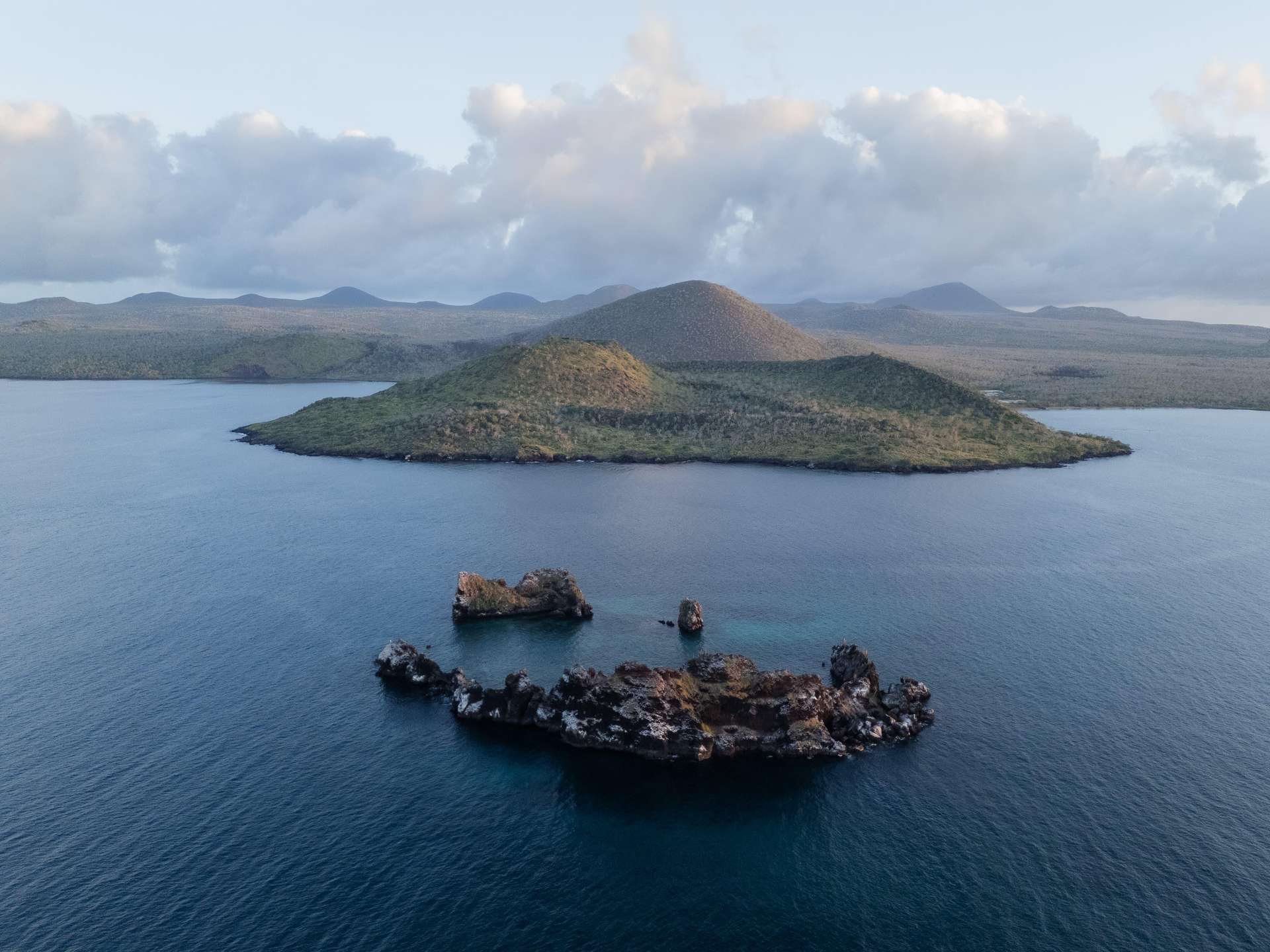
In the 1930s, a small volcanic island in the Galápagos archipelago became the stage for one of history's most bizarre social experiments. Floreana Island attracted a handful of European settlers seeking utopia in isolation, but what unfolded was a dark tale of mysterious disappearances, suspicious deaths, and psychological unraveling. Yet amid the chaos, one woman—Margret Wittmer—not only survived but thrived, raising a family and living peacefully until her death at age 95 in 2000. Her story, contrasted with the tragic fates of her neighbors, offers profound insights into what truly determines survival when society's structures disappear.
The Galápagos Affair: When Isolation Meets Ambition
The story began in 1929 when Dr. Friedrich Ritter, a German philosopher, and his companion Dore Strauch arrived on Floreana seeking to live out Nietzschean ideals far from civilization. They were soon followed by the Wittmer family in 1932—Heinz, Margret, and their young son—who came seeking a simpler life. Then arrived the self-proclaimed "Baroness" Eloise von Wagner Bosquet with two male companions, announcing her intention to build a luxury hotel on the deserted island.
What followed reads like a mystery novel. The Baroness and one of her lovers vanished without a trace in 1934. Dr. Ritter died under suspicious circumstances shortly after, allegedly from food poisoning despite being fanatically careful about his diet. The Baroness's remaining companion was found dead on a neighboring island. Meanwhile, the Wittmer family quietly continued their life, staying conspicuously distant from the escalating drama.
The obvious question: Did isolation cause these tragedies? The answer is more nuanced than a simple yes or no.
Isolation as Amplifier, Not Creator
The evidence suggests that isolation doesn't create conflicts from nothing—rather, it acts as a powerful magnifying glass for traits that already exist. The settlers brought with them their ambitions, jealousies, philosophical convictions, and psychological vulnerabilities. What isolation did was remove all the guardrails that normally keep such tendencies in check.
In ordinary society, we're constrained by laws, social norms, fear of judgment, and community intervention. When you're angry at a neighbor, you can't simply act on that anger because there are police, courts, and social consequences. When someone behaves outrageously, community pressure typically moderates their behavior. But on Floreana, none of these mechanisms existed.
The Baroness's need for control—which might have made her merely difficult in Berlin—became tyrannical behavior when there was no authority to check her. Dr. Ritter's philosophical extremism, which might have been manageable as an eccentric professor, intensified into misanthropic isolation. Without external mediation, minor irritations became major conflicts. Without legal systems to enforce property rights or resolve disputes, disagreements became existential threats.
The absence of authority specifically created a dangerous vacuum. When there's no legitimate power structure, individuals attempt to fill that void through force of personality, manipulation, or intimidation. Actions have no formal consequences, so self-regulation disappears. People take justice into their own hands, transforming disagreements into personal vendettas.
The Wittmer Difference: Survival of the Fit (not the fittest)
This makes Margret Wittmer's story all the more remarkable. While chaos consumed her neighbors, she raised children, built a sustainable homestead, and maintained psychological stability for nearly seven decades on the same island where others met mysterious ends within years.
What made her different? The answer challenges our assumptions about survival in extreme circumstances. Margret didn't survive because she was the strongest, the smartest, or the most dominant. She survived because she was fit—appropriately adapted to what isolated life actually required.
First, the Wittmers maintained a strong family unit. Unlike the couples or individuals with companions among the other settlers, they had a multi-generational family structure that provided built-in social support, emotional stability, and practical cooperation. This buffered them against the psychological strain that isolated individuals couldn't withstand.
Second, Margret possessed a spiritual and moral framework that provided both meaning and behavioral guidelines. In an environment without external authority, her faith served as an internalized authority system—offering ethical guidelines when no legal consequences existed. Her spiritual beliefs gave purpose beyond mere survival, reducing the existential anxiety that plagued other settlers. Prayer and faith provided stress management during inevitable hardships.
Third, the Wittmers were relentlessly practical. They focused on building a sustainable life rather than philosophical experiments or grandiose schemes. This grounded approach made them less vulnerable to the psychological deterioration that affected more ideologically-driven settlers.
Fourth, they maintained strategic distance from others' conflicts. This wasn't cowardice but wisdom—recognizing that engagement in escalating dramas would magnify problems rather than solve them. While the Baroness sought to dominate and Dr. Ritter became increasingly antagonistic, the Wittmers simply... kept to themselves.
What This Means for Human Resilience
The Floreana story offers a powerful framework for understanding human behavior when social structures collapse. It suggests that isolation combined with absence of authority creates conditions where character is both revealed and magnified. The same environment that drove some settlers to mysterious fates allowed others to flourish—the difference lay not in the environment but in the psychological and social resources individuals brought with them.
This has profound implications beyond historical curiosity. Modern Antarctica research stations, long-duration space missions, and even digital communities where anonymity creates isolation from social consequences all face similar dynamics. The lesson from Floreana is clear: in such environments, psychological screening matters more than technical skills. Social structures matter more than individual brilliance. Internalized values matter more than external enforcement.
The contrast between the Baroness—who tried to survive through dominance—and Margret Wittmer—who survived through stability, faith, and family—suggests that "survival of the fittest" is often misunderstood. In isolated, authority-free environments, fitness isn't about competitive strength but appropriate adaptation. It's about having the psychological tools, social support, and value systems that create stability rather than chaos.
The Enduring Mystery
We'll never know exactly what happened to the Baroness or whether Dr. Ritter's death was truly an accident. But perhaps that's not the most important question. The real lesson from Floreana isn't about solving a historical mystery—it's about understanding what happens to human nature when civilization's constraints disappear.
Margret Wittmer's 95 years on Floreana, outliving all other original settlers by decades, stands as testament to a simple but profound truth: in extreme isolation, survival favors not the ruthless or the brilliant, but those with strong social bonds, internalized moral frameworks, practical skills, and the wisdom to avoid unnecessary conflict. Her story suggests that when authority vanishes and isolation intensifies, what saves us isn't dominance but decency—not individual superiority but community cohesion—not philosophical abstraction but grounded purpose.
In an age of increasing digital isolation and potential future space colonization, these lessons from a remote Galápagos island in the 1930s remain remarkably relevant. The Floreana affair reminds us that human character, when stripped of society's moderating influence, reveals its true nature—and that survival in such circumstances depends less on defeating others than on maintaining the internal and social structures that keep us human.